
Our Blogs

What Happens If You Don't Choose an Electricity Provider in Texas?
Moving to a new home in Texas comes with several things to arrange, and electricity service is one of them. In many parts of Texas, you can choose the company that supplies your electricity. This is possible because much of the state has a deregulated electricity market.But what happens if you move in and do not choose an electricity provider?Your electricity may still be available, but that does not mean you are getting the best rate or plan. Depending on your situation, you could be placed on a default service or another temporary arrangement. You may also have fewer choices and pay more than you expected.Understanding how electricity service works can help you avoid surprises on your bill. Before moving or when your current contract is ending, take time to compare your options and choose a plan that fits your home and energy use.Want to understand how electricity service works in Texas? Explore Aggregate Energy's How It Works guide to learn how choosing an electricity plan can help you make a more informed decision.Can You Live in Texas Without Choosing an Electricity Provider?You may be able to have electricity without personally selecting a provider, but it depends on where you live and your service situation.Texas has a deregulated electricity market in many areas. This gives customers the ability to choose their retail electricity provider, often called an REP.Other parts of Texas have regulated electricity service. In these areas, customers generally do not choose between competing electricity providers because the local utility handles the electricity service.It is also important to understand that your electricity provider and your local utility are not the same thing.Your retail electricity provider handles your electricity plan, rate, and billing. Your local utility, also called a transmission and distribution utility or TDU, maintains the power lines and delivers electricity to your home.So even when you choose a different electricity provider, the same local utility may still deliver the power to your home.What Happens If You Don't Select an Electricity Provider?If you do not select an electricity provider when you need to, you may not simply be left without power. Your situation depends on whether you are moving into a new home, ending a previous contract, or dealing with an existing account.You May Be Placed on Default or Holdover ServiceIf you do not choose a new plan when your current electricity contract ends, you may remain on a temporary or month to month arrangement depending on your provider and account terms.This can give you time to select another plan, but it is not always the cheapest option.Always check the terms of your current plan before the contract ends. Your Electricity Facts Label and contract documents can explain what happens after your contract period.You Could Pay Higher Electricity RatesOne of the biggest concerns with waiting is cost.A plan that worked well when you first signed up may no longer be the best option when your contract ends. Rates can change based on market conditions, season, usage, and the plan you choose.If you stay on a less competitive arrangement without comparing other plans, you could end up paying more than necessary.Your Plan Options May Become More LimitedWaiting until the last minute can also reduce your choices.You may miss plans with longer fixed rates, different contract lengths, renewable energy options, or features that better match your home's electricity usage.Taking time to compare plans before you need one gives you more control over your decision.Waiting Can Cost More Over TimeA few days of delay may not seem important. But if you remain on an expensive rate for several months, the extra cost can add up.That is why it is smart to review your options before your current contract ends or before you move into a new home.Who Supplies Your Electricity If You Don't Choose a Provider?It helps to understand the two main companies involved in your electricity service.The Role of Your Local Utility CompanyYour local utility, or TDU, is responsible for delivering electricity to your home through the local power grid.The utility maintains power lines, responds to outages, and handles the physical delivery of electricity.Your utility does not necessarily determine which retail electricity plan you use.Your Utility and Electricity Provider Are DifferentYour retail electricity provider is the company you choose for your electricity plan.The provider determines the plan's pricing structure, contract terms, and other features. Your bill may also include charges associated with the local utility.This means changing your electricity provider does not mean changing the company that maintains the power lines in your area.Your Electricity Can Still Be DeliveredEven when you switch providers, your local utility continues to deliver electricity to your home.You do not need a new set of power lines or a different physical connection when you change providers. The change mainly involves your electricity plan and account.The Risks of Delaying Your Electricity Plan SelectionPutting off your electricity decision can create unnecessary costs and stress.Higher Monthly BillsIf you remain on an expensive rate, your monthly bill may be higher than it needs to be.The impact becomes more noticeable when your home uses a lot of electricity, especially during hot Texas summers.Missed Promotional or Fixed Rate PlansProviders may offer different plans with different contract lengths and pricing structures.If you wait until the last minute, you may miss an opportunity to lock in a plan that better suits your needs.Automatic Contract RenewalsSome electricity plans may have renewal terms that take effect when your original contract ends.Do not assume your rate will stay the same. Check your contract and renewal information so you know what happens next.Less Control Over Your Electricity CostsChoosing your provider gives you more control over your electricity plan.Instead of waiting for your current arrangement to change, you can compare available options and select a plan based on your expected usage, budget, and preferences.Not sure what to look for when comparing electricity plans? Aggregate Energy can help you understand your options and make a more informed electricity choice.How to Choose the Right Electricity ProviderChoosing an electricity provider is not only about finding the lowest advertised rate. You should look at the complete plan before signing up.Compare Rates and Contract TermsStart by comparing the electricity rate and contract length.A low advertised rate may come with specific usage requirements, fees, or other conditions. Look beyond the headline price and check what you will actually pay based on your expected usage.Review the Electricity Facts LabelThe Electricity Facts Label, or EFL, is one of the most useful documents when comparing electricity plans.It provides important information about the plan, including pricing, contract details, renewable energy content, and other charges.Reading the EFL can help you understand the plan before you sign up.Consider Renewable Energy OptionsIf renewable energy matters to you, check whether the plan includes renewable energy or renewable energy credits.Texas has a large renewable energy market, so you may find plans with different renewable energy options.Match the Plan to Your Monthly UsageYour home's electricity usage can change throughout the year.Air conditioning can make summer usage much higher than other months. Before choosing a plan, consider your home's size, number of residents, appliances, and typical energy habits.A plan that works for a small apartment may not be the right fit for a large family home.What Should New Texas Residents Do First?If you are moving to Texas, arranging electricity should be part of your moving checklist.Check If Your ZIP Code Allows Electricity ChoiceNot every area of Texas has the same electricity market.First, check whether your new address is located in a deregulated area where you can choose your electricity provider.Compare Available ProvidersIf you can choose your provider, compare the available plans before your move.Look at rates, contract terms, fees, renewable energy options, and the EFL.Schedule Electricity Service Before Moving DayDo not wait until you arrive at your new home.Set up your electricity service ahead of your move in date when possible. This can help you avoid last minute problems and make your move easier.Avoid Last Minute Setup IssuesHaving electricity ready when you move in means one less thing to worry about.Give yourself enough time to compare plans and complete the signup process rather than choosing a plan in a hurry.Why Compare Electricity Plans Instead of Waiting?Comparing electricity plans gives you more control over what you pay and what you receive from your plan.Better Pricing OpportunitiesElectricity rates can vary between plans and providers.Comparing your options can help you find a rate that fits your budget and expected usage.More Plan ChoicesYou may find fixed rate plans, renewable energy plans, different contract lengths, and other options when you compare providers.Waiting may leave you with fewer practical choices.Transparent Rate ComparisonsLooking at the EFL and complete plan details helps you compare plans more accurately.Instead of choosing based only on an advertised rate, you can look at the full pricing structure and terms.Long Term SavingsChoosing a suitable plan can help you avoid paying more than necessary over the length of your contract.Even a small difference in your electricity rate can become meaningful when multiplied across many months of household usage.CTA: Ready to compare your electricity options? Aggregate Energy helps you understand Texas electricity plans so you can choose with more confidence.FAQsDo I Have to Choose an Electricity Provider in Texas?If you live in a deregulated part of Texas, you generally have the option to choose your retail electricity provider. If you live in a regulated area, your electricity service may be handled by the local utility instead.Will My Electricity Be Turned Off If I Don't Choose a Provider?Not necessarily. What happens depends on your location and account situation. You may remain on an existing or temporary service arrangement. However, you should not assume that the arrangement will offer the best rate.Who Provides My Electricity If I Don't Select a Plan?Your electricity may continue through your existing provider, a default arrangement, or another applicable service depending on your situation. Your local utility is responsible for physically delivering electricity to your home.Can I Switch Providers Later If I Don't Like My Current Plan?In many deregulated areas, you can switch providers. However, check your current contract for the term length, early termination fee, and other conditions before switching.How Do I Know If My Area Allows Electricity Choice?You can check whether your address is located in a deregulated electricity market. Your ZIP code and local utility area can help determine whether you have the option to choose among retail electricity providers.ConclusionYou do not always have to personally choose an electricity provider to keep your lights on in Texas. However, avoiding the decision does not necessarily mean you are getting the best electricity plan.If you live in a deregulated area, comparing providers gives you more control over your rate, contract terms, and plan features. This is especially important when moving into a new home or when your current electricity contract is coming to an end.Before you let your electricity service continue without reviewing your options, compare available plans and read the EFL carefully. A little research can help you avoid unexpected costs and choose a plan that better fits your home and budget.Aggregate Energy makes it easier to understand your electricity options so you can make a smarter choice for your Texas home.
By Aggregate Energy Team
Aug 31, 2026

Best Electricity Plans for Large Families in Texas
A large family can use a lot more electricity than a smaller household. More people usually means more showers, laundry loads, meals, lights, TVs, computers, and other devices running throughout the day. In Texas, hot summers can also make air conditioning one of the biggest parts of your monthly electricity use.The right electricity plan can help you manage those costs. But the cheapest advertised rate is not always the best deal for a large household.Your actual usage matters. A plan that looks cheap at 500 kWh may not offer the same value when your home uses 2,000 kWh or more each month. That is why comparing plans based on your household's real usage is one of the smartest ways to find better value.Ready to find a plan that fits your household? Use Aggregate Energy to compare Texas electricity options based on your needs and usage.Why Large Families Need the Right Electricity PlanWhen several people live in one home, electricity demand can add up quickly.Higher Daily Electricity UsageA large family may have several appliances and electronic devices running throughout the day. Refrigerators, washing machines, dryers, dishwashers, televisions, computers, gaming systems, and other devices can all increase monthly usage.More Appliances and Electronic DevicesLarge households often use multiple devices at the same time. You may have several TVs running, multiple computers charging, or more frequent use of kitchen appliances.Over a full billing cycle, these small increases can add up to hundreds of additional kWh.Increased Cooling and Heating CostsTexas weather can have a major impact on household electricity use. The U.S. Energy Information Administration reports that electricity is the main heating fuel for 60.5% of Texas homes.During periods of extreme heat, your air conditioner may run for long periods. A larger home can also require more energy to maintain a comfortable temperature.Managing Monthly Household ExpensesFor a large family, an unexpected electricity bill can put pressure on the household budget. Choosing a plan that matches your typical usage can make monthly costs easier to understand and manage.What Makes an Electricity Plan Ideal for Large Families?There is no single electricity plan that is best for every large family. Your ideal plan depends on your usage, budget, home, and preferences.Here are some features worth checking.Competitive Price Per kWhThe price per kWh is important because a large household can use a significant amount of electricity.However, do not compare this number alone. Look at the total pricing information in the Electricity Facts Label before making a decision.Fixed Rate Plans for Predictable BillsA fixed rate plan can make budgeting easier because the energy rate remains fixed for the contract period, subject to the terms of the plan.For families with high and consistent electricity use, predictable pricing can make monthly expenses easier to plan.No Unexpected FeesCheck for base charges, minimum usage fees, early termination fees, and other charges before enrolling.A plan with a lower advertised rate can sometimes cost more once additional charges and usage requirements are considered.Flexible Contract OptionsConsider how long you expect to stay at your current home.A longer contract may provide more price stability, while a shorter contract may provide more flexibility. Always check the early termination terms before signing up.Renewable Energy ChoicesSome large families may also prefer a plan that includes renewable energy.If renewable energy is important to you, check the renewable energy information shown on the plan's Electricity Facts Label.How Much Electricity Does a Large Family Typically Use?There is no official kWh number that defines a large family. Electricity use depends on the size of your home, number of occupants, appliances, insulation, weather, and daily habits.For context, Texas residential customers used about 165.1 billion kWh in 2024. EIA data also shows an average residential electricity use of about 1,096 kWh per customer per month in Texas that year.A family of five or more can use well above the state average, especially in a larger home with heavy air conditioning use.As a practical shopping range, a household using around 1,500 to 2,500 kWh or more should pay close attention to how a plan is priced at higher usage levels. This is a planning range, not an official definition of large household usage.9 Factors That Can Increase Electricity ConsumptionYour monthly usage may increase because of:• A larger home• Several air conditioning units• Frequent use of washers and dryers• Electric water heating• Older appliances• Multiple refrigerators or freezers• More people working or studying at home• Gaming systems, computers, and entertainment devices• Poor insulation or inefficient windowsThe more electricity your household uses, the more important it becomes to compare plans at your actual usage level.Features to Compare Before Choosing a PlanBefore choosing an electricity plan, look beyond the advertised rate.Energy RateCheck the energy charge and the average price shown for different usage levels.A large family should pay particular attention to pricing around its normal monthly usage.Base ChargesSome plans include a monthly base charge. Even a small recurring charge can affect your total cost over a year.Contract LengthCheck whether the plan lasts for 12 months, 24 months, or another period. Choose a term that fits your plans for the home.Early Termination FeesIf you need to move or change plans before your contract ends, an early termination fee may apply. Review the terms before enrolling.Bill Credits and Usage RequirementsBill credits can look attractive, but they may only apply when your usage falls within a specific range.For a large family, this matters because your usage can change between seasons. Always check what happens if your monthly usage moves above or below the required level.Electricity Facts LabelThe Electricity Facts Label, commonly called the EFL, is one of the most important documents to review before choosing a Texas electricity plan.Texas rules require EFLs to disclose important information about electricity pricing, contract terms, fees, renewable energy details, and other plan conditions.The EFL also helps you understand how the advertised rate is calculated. This is especially important for large families because your actual usage may be much higher than the lowest usage level shown in an advertisement.Fixed vs. Variable Electricity Plans for Large FamiliesThe choice between fixed and variable pricing depends on how much price stability you want.Benefits of Fixed Rate PlansA fixed rate plan can make budgeting easier because the energy rate is fixed for the agreed contract period, according to the plan terms.For a large household with high electricity use, predictable pricing can make it easier to estimate monthly energy costs.When a Variable Rate Plan May WorkA variable rate plan can make sense for some households that want flexibility and understand that the price may change.However, large families should be comfortable with the possibility of changing monthly costs before choosing this type of plan.Which Option Offers More Budget Stability?If your main goal is predictable monthly budgeting, a fixed rate plan may be easier to manage.If flexibility is more important and you are comfortable with changing rates, a variable plan may be worth considering.The best choice depends on your household's priorities and the specific terms of the plan.Simple Ways Large Families Can Lower Electricity BillsChoosing a better electricity plan is only one part of managing energy costs. Your daily habits also matter.Use Smart ThermostatsA smart thermostat can help you manage your home's temperature more efficiently. Adjusting the temperature when nobody is home can also help reduce unnecessary cooling or heating.Upgrade to Energy Efficient AppliancesOlder appliances may use more electricity than newer efficient models. When replacing appliances, look for energy efficient options that fit your household's needs.Run Appliances During Lower Cost PeriodsIf your electricity plan has different pricing based on usage timing, check the plan terms before changing when you run appliances.For a standard fixed rate plan, moving laundry to a different time of day may not change the price per kWh.Monitor Monthly Energy UsageLook at your electricity bills each month. Pay attention to how much electricity you used and how your usage changed from the previous month.This information can help you choose a better plan when your contract is nearing its end.Schedule Regular HVAC MaintenanceYour HVAC system can have a major effect on electricity use in Texas. Regular maintenance can help the system operate properly and may reduce unnecessary energy consumption.Common Mistakes Large Families Should AvoidChoosing a Plan Based Only on the Lowest Advertised RateA low advertised rate does not automatically mean a low total bill.Always check pricing at your expected usage level and review the full plan details.Ignoring the Electricity Facts LabelThe EFL provides important details that may not be obvious from an advertisement.Read it before enrolling so you understand the rate, fees, credits, contract term, and other conditions.Underestimating Monthly Electricity UsageDo not choose a plan based on a 500 kWh or 1,000 kWh example if your family normally uses much more electricity.Look at your previous bills to estimate your normal monthly usage.Forgetting to Compare Plans Before Contract RenewalYour current plan may no longer be the best fit when your contract ends.Start comparing options before the expiration date so you have enough time to review your choices.Why Compare Electricity Plans With Aggregate Energy?Choosing an electricity plan can become confusing when you have to review different providers, rates, contract terms, and plan details.Aggregate Energy brings electricity options together and helps consumers compare plans based on their needs. The company works with PUC licensed suppliers and focuses on transparent pricing and plan information.For a large family, this can make the comparison process easier because you can focus on plans that fit your expected usage instead of choosing based only on a headline rate.Aggregate Energy also uses a group purchasing model. As participation grows, the company aims to use the collective buying power of its member community when negotiating electricity rates and rewards.If you are moving into a new home or need to identify the electricity service location, you can also use the Aggregate Energy ESID Lookup to find the ESI ID associated with your service address.You can learn more about the process through How Aggregate Energy Works.Compare your electricity options with Aggregate Energy and find a plan that fits your family's usage, budget, and needs.FAQsWhat is the best type of electricity plan for a large family in Texas?For many large families, a fixed rate plan can be a practical choice because it can make budgeting easier. However, the best plan depends on your actual electricity usage, contract needs, and the specific terms shown in the EFL.How much electricity does a family of five or more typically use?There is no fixed amount for a family of five or more. A household may use more than the Texas residential average of about 1,096 kWh per month, particularly if it has a larger home, heavy air conditioning use, or several electric appliances.Are fixed rate plans better for large households?A fixed rate plan can be useful for large households that want more predictable energy pricing. However, you should still compare the complete plan terms and pricing at your expected monthly usage.Can switching electricity providers reduce my monthly bill?Switching providers can reduce your electricity costs when you find a plan with better pricing and terms for your actual usage. However, savings are not guaranteed. Compare the full plan details instead of relying only on the advertised rate.How often should I compare electricity plans?It is a good idea to compare plans before your current contract expires. You should also review your options when your household usage changes significantly, such as after moving to a larger home or adding major electric appliances.ConclusionLarge families often have higher electricity usage, so choosing the right electricity plan can make a meaningful difference to the household budget.The key is to compare plans using your actual usage rather than focusing only on the lowest advertised rate. Check the price per kWh, base charges, contract length, early termination fees, bill credits, usage requirements, and Electricity Facts Label.Your electricity habits matter too. Efficient appliances, smart thermostat settings, HVAC maintenance, and regular usage monitoring can all help you manage your energy costs.If you are ready to compare your options, Aggregate Energy can help you explore Texas electricity plans based on your household needs and usage.
By Aggregate Energy Team
Aug 31, 2026

Is Now a Good Time to Switch Your Texas Electricity Plan?
If you live in Texas, the timing of your electricity plan can affect how much you pay each month. Electricity rates can change, your contract may be close to ending, and your household's energy use may be different from when you first chose your plan.So, is now a good time to switch your Texas electricity plan?It can be, especially if your contract is ending, your current rate is no longer competitive, or your energy needs have changed. The best approach is to compare available plans before you switch. This helps you understand your options and choose a plan that fits your budget and usage.Before making a decision, check your current contract, compare rates, and review the Electricity Facts Label (EFL).Ready to see if you can find a better electricity plan? Compare available Texas electricity plans with Aggregate Energy and find an option that fits your home and energy needs.When Is the Best Time to Switch Your Texas Electricity Plan?There is no single date that is best for every Texas household. The right time depends on your contract, electricity usage, and the plans available in your area.Here are three situations when switching may make sense.Before Your Contract ExpiresYour contract expiration date is one of the most important dates to watch.If you wait until your current plan ends without reviewing your options, you could be moved to a different rate or renewal offer. Comparing plans before your contract expires gives you more time to make an informed choice.Check your current agreement and note the exact expiration date. Then start comparing plans early.During Periods of Lower Market RatesElectricity prices can change based on market conditions, fuel costs, weather, demand, and other factors.If competitive plans are available at a rate that works better for your household, comparing them could be worthwhile. However, do not choose a plan based only on the advertised rate.Look at the full plan details, including the contract length, fees, usage requirements, and EFL.When Your Household Energy Needs ChangeYour electricity plan should match how you use energy.For example, your usage may change if you start working from home, add a family member, move into a larger home, install solar panels, or purchase an electric vehicle.A plan that worked well before may not be the best fit anymore.7 Signs It's Time to Switch Your Electricity PlanSometimes the signs are easy to spot. Other times, they show up slowly through your electricity bills.Here are seven situations that deserve a closer look.1. Your Contract Is Ending SoonA contract expiration date is a good reason to review your options.Do not automatically accept the first renewal offer. Compare other plans before deciding whether to stay or switch.2. Your Electricity Bill Keeps IncreasingA higher electricity bill does not always mean your electricity rate increases.Your usage may have gone up because of hotter weather, a larger household, or greater use of heating and cooling.Still, if your usage is similar but your costs continue to rise, review your plan and EFL to understand what you are paying.3. Your Current Rate Is No Longer CompetitiveElectricity plans change over time. A plan that looked attractive when you enrolled may not be competitive when you reach the end of your contract.Compare your current rate with available options, but make sure you compare plans at the same usage level. A very low advertised rate may depend on specific usage conditions or bill credits.4. You're Moving to a New HomeMoving is another reason to review your electricity plan.Your new home may have different square footage, appliances, insulation, or energy usage. Your current plan may also not be available at your new address.Before moving, check which electricity plans are available for your new location and understand any requirements for starting service.5. Your Household Energy Usage Has ChangedMaybe your family has grown. Maybe your children have moved out. Maybe you now work from home.These changes can affect your monthly electricity usage.When comparing plans, use your actual historical usage when possible. This gives you a better idea of how a plan may perform for your household.6. You Installed Solar Panels or Bought an EVSolar panels and electric vehicles can significantly change how your home uses electricity.If you installed solar, look closely at plans that are designed to work with solar generation and excess energy.If you bought an EV, your electricity usage may increase because of home charging. A plan that works well for your new usage pattern may be different from the one you had before.7. You're on a Variable Rate PlanVariable rate plans can change over time.If you prefer more predictable electricity pricing, you may want to compare fixed rate options. A fixed rate does not necessarily guarantee a lower bill because your usage still matters, but it can provide more predictable energy pricing during the contract term.Always review the plan terms before switching.How Switching at the Right Time Can Save You MoneySwitching plans does not automatically mean you will pay less. The savings depend on the rate, your usage, fees, contract terms, and other charges.However, switching at the right time can help you avoid unnecessary costs.Lock In a Competitive Fixed RateIf you prefer predictable pricing, a fixed rate plan may help you better understand your energy costs during the contract period.Before enrolling, check the EFL to see the average price per kilowatt hour at different usage levels.Avoid Expensive Automatic RenewalsWhen a contract ends, your next pricing arrangement may be different from the rate you had before.Review your options before the expiration date instead of waiting until the last minute.Take Advantage of Better Plan OptionsYour electricity needs can change, and so can the plans available to you.Comparing several options can help you find a plan with terms, pricing, and features that better match your household.Think your current electricity plan may no longer be the right fit? Compare Texas electricity plans with Aggregate Energy before your next contract renewal.What to Check Before Switching Your Electricity PlanBefore choosing a new plan, look beyond the headline rate.How ESID Lookup Helps When Switching Electricity PlansYou can explain that an ESID (Electric Service Identifier) is a unique number associated with an electricity service location in Texas. Customers may need their ESID when identifying their service address or completing certain electricity plan and provider processes.You can then naturally mention Aggregate Energy's ESID Lookup tool as a way to help users find the correct service identifier before comparing or enrolling in a plan.Contract End DateFind out when your current contract ends. This can help you avoid unnecessary early termination charges.Early Termination FeesIf you leave a contract early, your current provider may charge an early termination fee.Check your Electricity Facts Label and contract documents before switching.Electricity Facts LabelThe EFL is one of the most useful documents when comparing Texas electricity plans.It provides important information about the plan, including pricing, contract terms, fees, and other charges.Do not compare plans based only on the advertised cents per kilowatt hour.Average Monthly Electricity UsageYour electricity usage can affect the effective price you pay.When comparing plans, look at your previous electricity bills and identify your typical monthly usage. Then compare plans at similar usage levels.Renewable Energy OptionsIf using renewable energy is important to you, check the plan's renewable energy content and related details.Some Texas electricity plans include renewable energy benefits or renewable energy certificates.Should You Switch Before Your Current Contract Ends?Sometimes switching before your contract ends can make sense. Other times, waiting is the better choice.The key is to compare the potential savings with any early termination fee.When Paying an Early Termination Fee May Still Save MoneySuppose your current plan has a high rate and you find another suitable plan with significantly lower costs.If the potential savings over the remaining contract period are greater than the early termination fee, switching could make financial sense.Do the math before making the decision.When Waiting Makes More SenseIf your current plan has a competitive rate and you have a large early termination fee, switching immediately may not be worthwhile.You may be better off staying with your current plan until the contract is closer to its expiration date, then comparing your options.Understanding the 14 Day Switching Rule in TexasTexas rules provide protections for residential customers who want to switch electricity providers near the end of their contract.In general, residential customers can switch providers during the 14 day period before their existing contract expires without an early termination fee, subject to applicable rules and the specific circumstances of the account.Because plan terms can vary, check your current contract and the latest guidance from the Public Utility Commission of Texas before scheduling a switch.How to Switch Your Texas Electricity Plan in 5 Simple StepsSwitching electricity plans does not have to be complicated.1. Review Your Current PlanStart by checking your current rate, contract expiration date, EFL, and any early termination fee.2. Compare Available Electricity PlansLook at different plans available for your address.Compare the estimated price, contract length, fees, usage requirements, and other terms.3. Choose the Best Option for Your NeedsChoose a plan based on your actual electricity usage and household needs.Do not automatically choose the plan with the lowest advertised rate.4. Schedule Your Switch DateChoose a switch date that works with your current contract.If possible, plan ahead so you do not have to make a rushed decision when your contract expires.5. Enjoy Uninterrupted Electricity ServiceWhen you switch electricity providers in Texas, the physical electricity service to your home normally continues through the same local transmission and distribution system.Your new provider handles the billing and retail electricity service, while the local utility continues to maintain the delivery infrastructure.Why Texans Use Aggregate Energy to Compare Electricity PlansChoosing an electricity plan can feel confusing when you have multiple providers, rates, contract terms, and fees to consider.Aggregate Energy makes the comparison process simpler by bringing electricity plan options together in one place.Compare Multiple Providers in One PlaceInstead of checking different provider websites individually, you can compare available options through Aggregate Energy.Transparent Pricing With No Hidden SurprisesUnderstanding the full cost of an electricity plan matters.Aggregate Energy helps you look beyond the advertised rate so you can make a more informed comparison.Simple Online EnrollmentOnce you find a plan that fits your needs, the enrollment process can be completed online.Find Plans Based on Your Household's Energy NeedsEvery Texas household uses electricity differently.Your home size, number of residents, appliances, heating and cooling habits, and EV charging can all affect your usage.Aggregate Energy helps you compare options based on what makes sense for your household.Ready to compare your options? Use Aggregate Energy to explore Texas electricity plans and find one that fits your energy needs.FAQsIs now a good time to switch my Texas electricity plan?It can be a good time to switch if your contract is ending, your current rate is no longer competitive, your energy usage has changed, or you find a plan with better terms. Compare the full plan details before switching.Can I switch electricity providers before my contract ends?Yes, you can generally switch before your contract ends, but your current provider may charge an early termination fee. Check your contract and EFL before making the switch.Will my electricity service be interrupted if I switch?Generally, switching electricity providers does not mean your home loses physical electricity service. Your local transmission and distribution utility continues delivering electricity to your home.How long does it take to switch an electricity plan in Texas?The timing can vary based on your current contract, provider, switch date, and account details. Planning your switch before your current contract expires can help make the process smoother.Can switching providers lower my monthly electricity bill?It can, but switching providers does not guarantee lower bills. Your total cost depends on your electricity rate, usage, fees, contract terms, and other charges. Compare plans using your typical electricity usage to make a better decision.ConclusionSo, is now a good time to switch your Texas electricity plan?The answer depends on your current plan and household needs. If your contract is ending, your rate has become less competitive, or your electricity usage has changed, it may be worth comparing your options now.Before switching, check your contract expiration date, early termination fee, EFL, and typical electricity usage. Then compare plans based on the total value rather than just the advertised rate.With Aggregate Energy, you can compare Texas electricity plans in one place and choose an option that better fits your household.Compare your electricity options today with Aggregate Energy and make your next Texas electricity plan decision with confidence.
By Aggregate Energy Team
Aug 31, 2026
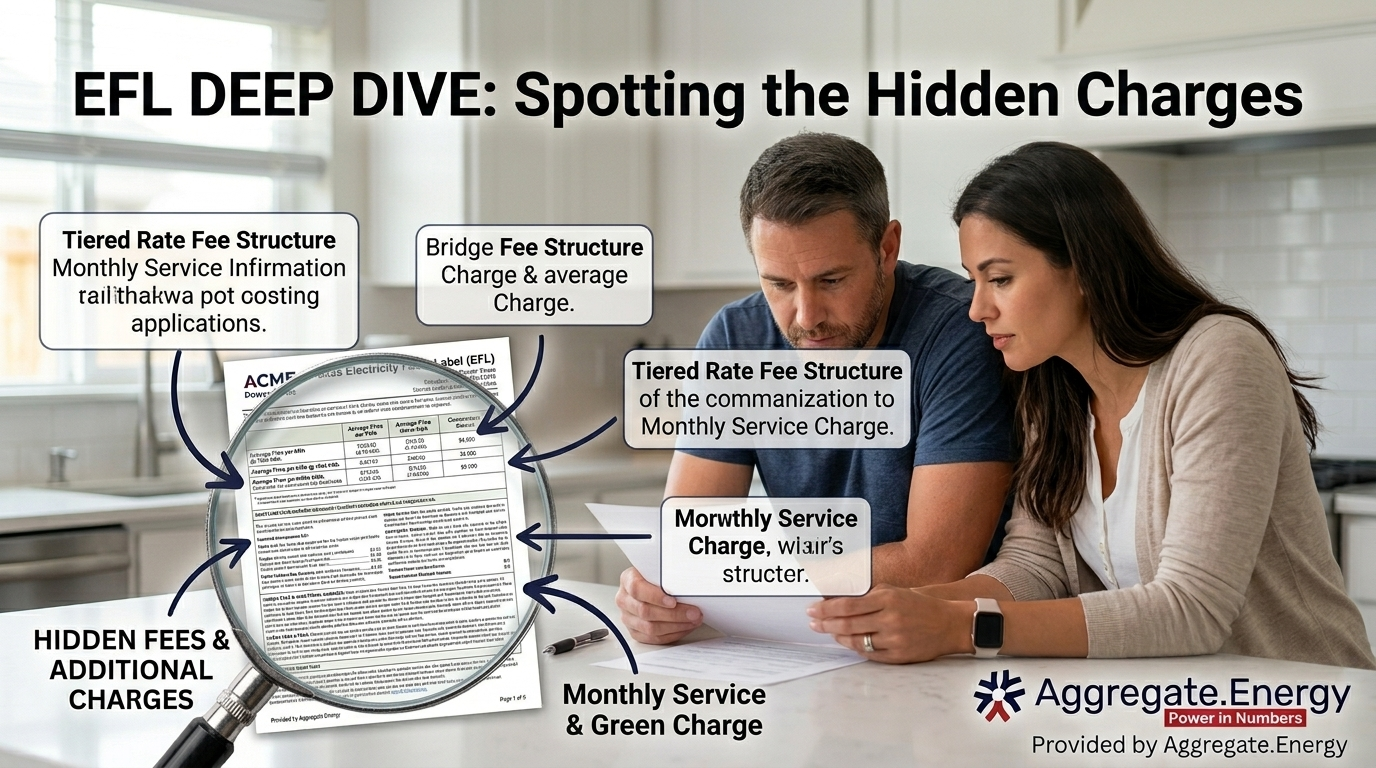
Texas Electricity Facts Label (EFL) Explained: How to Read It and Avoid Hidden Fees
Have you ever signed up for an electricity plan because the advertised rate looked great, only to feel confused when your first bill arrived?You're not alone.Many Texans focus on the price they see in an advertisement and never look at the Electricity Facts Label (EFL). The problem is that the advertised rate doesn't always tell the full story.An EFL contains important details about a plan's pricing, fees, contract terms, and usage requirements. Spending a few minutes reviewing it before you sign up can help you avoid unexpected costs later.In this guide, we'll explain what an EFL is, where to find it, how to read it, and which sections deserve the closest attention before choosing a Texas electricity plan.In a state where electricity competition gives consumers dozens of choices, understanding the EFL can save hundreds of dollars each year. According to recent average Texas electricity bill 2026 reports, many households now pay anywhere from $150 to $250 per month during high usage seasons, especially in the summer when air conditioners run almost nonstop. The U.S. Energy Information Administration also reports that Texas households use more electricity on average than most states because of the climate and cooling demand. That means even small pricing tricks inside a plan can make a noticeable difference on monthly bills. What Is a Texas Electricity Facts Label (EFL)?The Electricity Facts Label, often called an EFL, is one of the most important documents you'll see when shopping for electricity in Texas.Think of it as the nutrition label for an electricity plan.Just like a nutrition label helps you understand what's inside a food product, an EFL helps you understand what's inside an electricity plan.It provides information about:Electricity ratesContract termsFees and chargesRenewable energy contentUsage requirementsBefore choosing any plan, the EFL should be one of the first documents you review.Why Electricity Providers Must Provide an EFLTexas electricity providers are required to provide an EFL for their plans.The purpose is simple: transparency.Without a standardized document, comparing plans would be much more difficult.The EFL gives consumers a consistent way to review plan details and compare options side by side.Where to Find the EFL Before Choosing a PlanMost providers make the EFL available online.You can usually find it:On the plan details pageAs a downloadable PDFThrough electricity comparison websitesDuring the enrollment processIf you can't find the EFL, that's a good reason to slow down and ask questions before signing up.What Makes Texas EFLs Different From Other StatesTexas has one of the most competitive electricity markets in the country.Because residents can choose from many providers, comparing plans accurately becomes especially important.The Texas EFL gives homeowners and renters a standardized way to evaluate plans instead of relying only on advertisements or promotional pricing.Why Reading the EFL Matters Before You Choose a PlanMany electricity plans look similar at first glance.The EFL often reveals important differences that aren't obvious in the headline rate.The Rate You See Isn't Always the Rate You PayOne of the most common mistakes Texans make is assuming the advertised rate tells the whole story.In reality, electricity pricing can include:Energy chargesDelivery chargesBase feesUsage requirementsBill creditsA plan advertised at a low rate may end up costing more than expected depending on how much electricity your household uses.How Hidden Fees Can Increase Your Monthly BillSome plans include charges that don't get much attention during the shopping process.Examples may include:Monthly base chargesMinimum usage feesEarly termination feesLate payment feesThese costs may not seem significant at first, but they can add up over time.Reading the EFL helps you spot them before they impact your budget.Why Many Texans Get Surprised After Their First BillImagine signing up for a plan because it advertises a low price per kWh.Then your first bill arrives and it's much higher than expected.Often, the surprise isn't caused by higher electricity usage. It's caused by details hidden in the pricing structure that weren't reviewed beforehand.That's why understanding the EFL can be one of the smartest steps you take when choosing a plan.How to Read a Texas EFL (Step-by-Step Guide)Reading an EFL becomes much easier once you know which sections matter most.Check the Average Price per kWhThe EFL typically lists average pricing at:500 kWh1,000 kWh2,000 kWhThese examples help estimate costs, but they are only estimates. Your actual usage determines your true rate.Compare the Price at 500, 1000, and 2000 kWhThis section reveals whether the pricing stays stable or changes dramatically based on usage.For example:UsageRate500 kWh17¢1000 kWh11¢2000 kWh15 ¢This tells you the advertised low rate may only work near one specific usage level.Look for Base Charges and Monthly FeesMany plans include flat monthly charges regardless of electricity usage. A $9.95 monthly fee may not seem major, but over a year it adds up quickly.Understand Minimum Usage FeesSome plans charge extra if your monthly usage falls below a certain threshold, often 1,000 kWh.That means smaller apartments or energy-efficient homes can end up paying more per kWh than expected.Identify Tiered Pricing and Usage CreditsUsage credits are one of the most confusing pricing tactics in Texas electricity plans.For example:Use above 1,000 kWh → receive $100 bill creditUse below 1,000 kWh → no creditThis structure can dramatically change your actual rate depending on monthly consumption.Confirm Whether TDU Delivery Charges Are IncludedTDU charges are delivery fees from your utility company. They cover maintaining power lines and infrastructure.Some providers include these charges in the advertised rate, while others separate them. Always confirm how they’re handled.The Most Important Sections of a Texas EFLContract Length and Plan TypeMost plans range from month-to-month agreements to contracts lasting 12, 24, or even 36 months.Longer contracts may offer stable electricity rates Texas homeowners prefer during periods of rising market prices.Fixed Rate vs Variable Rate DetailsFixed-rate plans keep the energy charge stable during the contract term.Variable-rate plans can change monthly depending on market conditions. These plans sometimes start with low promotional pricing but increase later.Early Termination Fee (ETF)If you cancel before the contract ends, you may face an ETF. Some fees are flat amounts like $150, while others charge based on remaining months in the contract.Deposit Requirements and Credit ChecksSome providers require deposits based on credit history. Others advertise no-deposit plans but compensate with higher rates.Always check the EFL for deposit conditions before enrolling.Late Payment Fees and Billing PoliciesBilling terms matter more than people realize. Some plans charge late fees quickly, while others provide short grace periods.Reading these policies upfront prevents unnecessary surprises later.Common Pricing Tricks Hidden Inside Texas EFLsTexas electricity marketing can sometimes feel designed to attract attention first and explain details later.“Free Nights and Weekends” PlansThese plans sound attractive, especially for families who are home evenings and weekends. But daytime rates are often much higher.If most of your electricity use happens during daytime hours, the “free” periods may not actually save money.Plans With High Rates at Low UsageSome plans punish lower consumption with high effective pricing.This often affects:ApartmentsSmall householdsEnergy-efficient homesCheap Rates That Only Apply at One Usage LevelThis is one of the biggest traps in texas electric rates comparisons.A provider may advertise a low average rate based only on 1,000 kWh usage, even though many households consistently use more or less than that amount.Auto-Renewal and Rate Change ClausesSome contracts automatically renew into variable-rate plans after expiration. If customers forget to switch plans before renewal, rates can increase substantially.Red Flags to Watch for When Reading an EFLRates That Change Based on UsageIf pricing swings dramatically between 500 and 2,000 kWh usage levels, the plan may not offer stable monthly costs.High Monthly Fees With Low Advertised PricingLow advertised rates sometimes hide expensive monthly service fees.Always calculate the total expected bill instead of focusing only on cents per kWh.Unclear Language About TDU ChargesIf the EFL doesn’t clearly explain delivery charges, ask questions before enrolling.Transparency matters.Big Difference Between 500 kWh and 2000 kWh PricingLarge pricing gaps usually indicate:Tiered pricingUsage creditsMinimum usage penaltiesStable plans generally show more consistent pricing across usage levels.How to Compare Texas Electricity Plans Using the EFLMatch the Plan to Your Real UsageThe best plan for one household may be expensive for another.A family in a large home with heavy summer AC usage will likely have different needs than someone in a small apartment.Use past electricity bills to estimate your typical monthly usage before comparing plans.Compare Plans Using Estimated Monthly CostInstead of focusing only on advertised rates, estimate your total monthly bill using your actual usage.This provides a far more realistic comparison.Choose Transparent Plans With Simple PricingSimple pricing structures are often easier to predict and budget for.Many consumers prefer plans without:Usage creditsTiered pricingComplicated fee structuresTransparent plans may not always advertise the absolute lowest rate, but they often deliver more consistent monthly costs.Best Tips to Avoid Overpaying for Electricity in TexasAlways Download and Read the EFL FirstNever enroll in a plan without reading the EFL carefully.A five-minute review can prevent months of overpaying.Avoid Plans That Look Too Good to Be TrueIf a rate looks dramatically cheaper than competitors, there’s usually a condition attached. Low teaser pricing often hides usage restrictions or additional fees.Pick a Plan With Stable Pricing for SummerTexas summers can push electricity usage much higher. Stable pricing becomes especially valuable during hot months.Many homeowners prefer predictable bills instead of plans that fluctuate with usage levels.Choose Providers With Strong Customer ReviewsCustomer feedback often reveals issues that pricing alone does not show, including:Billing accuracyCustomer service qualityUnexpected feesRenewal practicesHow to Calculate Your True RateTo completely bypass provider marketing tricks, use your real monthly usage and calculate your actual effective rate using the numbers listed inside the EFL.True Monthly Bill = (Your kWh×Energy Charge) + Base Charge + TDU Fixed Fee + (Your kWh × TDU Per -kWh Fee) − Applicable CreditsOnce you estimate the total monthly bill, calculate your true electricity rate:True Rate per kWh = True Monthly Bill ÷ Your kWhThis method gives a much clearer picture of what you’ll actually pay instead of relying on advertised pricing alone.Final Thoughts: Reading the Texas EFL Can Save You HundredsMany Texans spend more time comparing advertised rates than reviewing the document that actually explains how a plan works.The Electricity Facts Label is often the best tool you have for understanding the true cost of an electricity plan.At Aggregate Energy, understanding electricity rates Texas residents can realistically expect is part of making smarter energy decisions. A transparent plan with predictable pricing often delivers better long-term value than flashy promotions with complicated conditions.Quick Checklist Before Signing Any ContractBefore enrolling in a plan, confirm:Average pricing at your usage levelWhether TDU fees are includedContract lengthEarly termination feesBase chargesUsage creditsVariable or fixed pricing structureWhen to Ask for Expert Help Before SwitchingIf a plan feels confusing, complicated, or overly promotional, asking questions before signing is always worth it.Electricity plans should be understandable. If pricing requires too much math to explain, that’s usually a sign to look more carefully.FAQsWhat does EFL mean in Texas electricity?EFL stands for Electricity Facts Label. It is a standardized document that explains an electricity plan's pricing, fees, contract terms, and other important details.Does the EFL include TDU charges?Most EFLs explain how TDU delivery charges apply to the plan. Reviewing this section helps you understand the full cost of service.Why do electricity rates change at different kWh levels?Some plans use bill credits, usage thresholds, or tiered pricing structures that affect the average cost at different usage amounts.What is a minimum usage fee in Texas electricity plans?A minimum usage fee is an extra charge that may apply if your monthly electricity usage falls below a certain level specified in the plan.How do I know if an electricity plan is truly fixed-rate?Review the EFL carefully. A fixed-rate plan should clearly state that the energy rate remains unchanged throughout the contract term, although regulated delivery charges may still change over time.
By Aggregate Energy Team
Aug 26, 2026
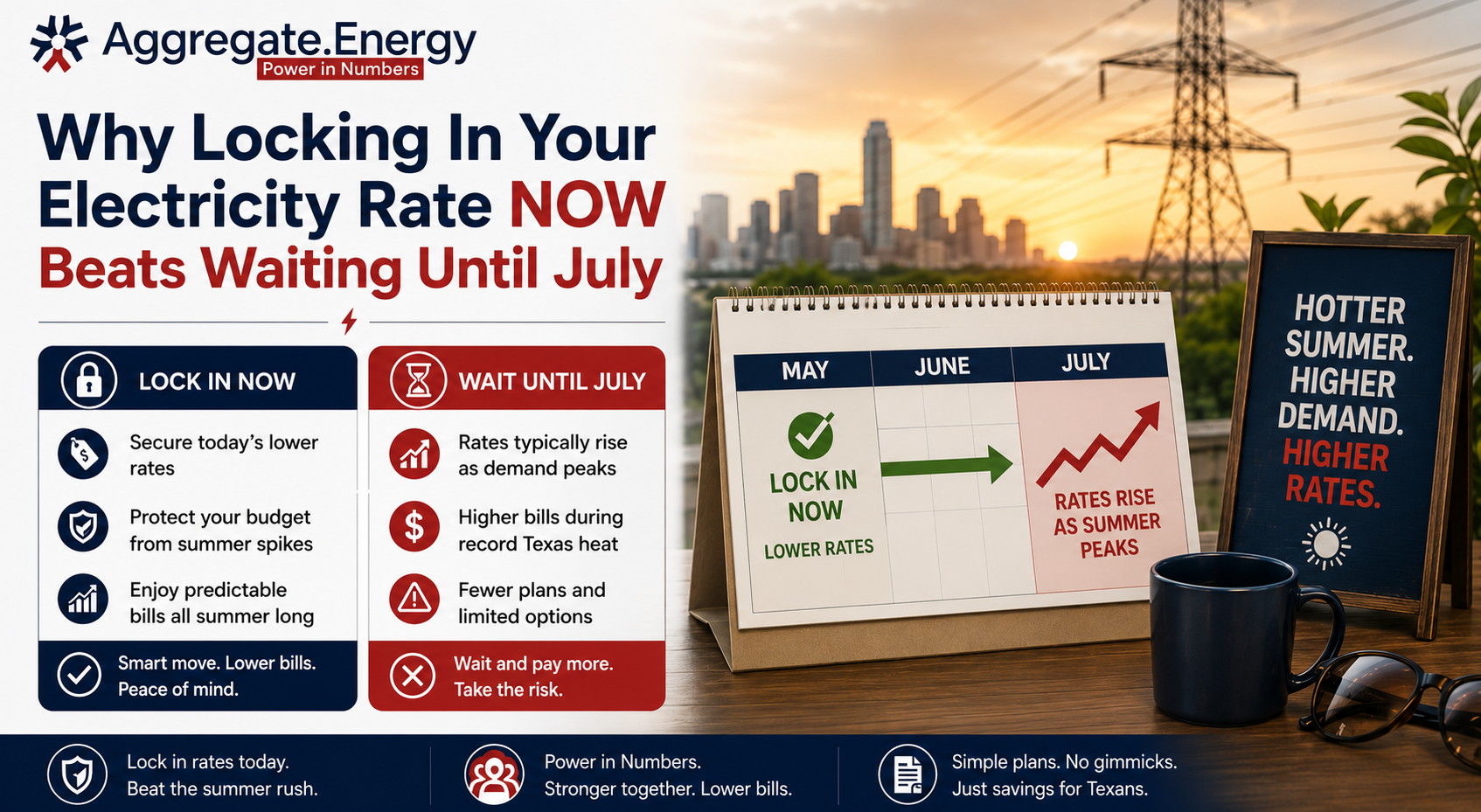
Why Locking In Your Electricity Rate Now Beats Waiting Until July
There's a quiet rule in the Texas electricity market: the best time to lock a rate is before everyone needs to.With a record-demand summer forecast, that timing matters more this year than most.Why Rates Look Worse During Peak SeasonElectricity pricing follows demand. When demand is forecast to hit an all-time high, providers price that risk in.Lock in during a calm month: you catch calmer pricing.Lock in mid-heatwave: you're shopping when rates already reflect the stress.The Cost of WaitingTimingWhat You Typically FaceLock in early (before peak)Calmer rates, more plan choiceWait until a heatwaveHigher rates, fewer good optionsLet a plan expireRoll onto costly month-to-month default The Expiring-Contract TrapThe most expensive mistake isn't picking the wrong plan. It's letting a contract lapse.When a fixed plan ends, you often roll onto a high month-to-month rate automatically.That rollover usually lands right in peak summer.Check your expiration date now, not in July.What Locking In Actually Protects You FromRecord-demand price spikes.Grid-alert day volatility.Auto-rollover to a default rate.Simple Timing ChecklistFind your contract end date today. Moving or switching? Locate your ESID first.If it expires within a few months, start shopping now.Lock a fixed rate before the summer peak, not during it.Where Aggregate Energy FitsWe help Texans lock in early, before demand rewrites the market.No commissions, no teaser rates, transparent terms.Group buying power secures pricing that holds through peak season.Enter your ZIP code and lock in before the summer rush.
By Aggregate Energy Team
Aug 04, 2026

Fixed or Variable? The Simple Way to Pick Before a Record Texas Summer
Every Texas electricity plan comes down to one basic choice: fixed or variable.Get it right and a brutal summer barely touches your bill. Get it wrong and you're along for the ride when prices spike.Here's the simple way to decide, especially with a record-demand summer forecast.The Difference in One Table Fixed RateVariable RateYour priceLocked for the termChanges month to monthSummer spikesYou're protectedYou're exposedPredictabilityHighLowBest forMost homes & small businessesShort-term or moving soonFixed Rate: The Steady ChoiceYour per-kWh price stays the same for the whole contract.A record-hot July doesn't change your rate.Easy to budget, no surprises.Trade-off: you commit for a term (often 12 months).Variable Rate: The GambleYour rate floats with the market.Can drop in mild months, but climbs when demand peaks.No contract lock-in, so you can leave anytime.Trade-off: summer is exactly when it turns against you.Watch Out for the Teaser TrapSome plans advertise a very low introductory rate that jumps after a month or two. It looks like a fixed deal but behaves like a variable one.Always check how long the advertised rate lasts.Read the Electricity Facts Label (EFL) for the real ongoing rate.So Which Should You Pick?For most Texas homeowners and small businesses heading into a record summer: fixed rate. Predictability beats a gamble when demand is forecast to hit an all-time high.Variable only makes sense if you're moving soon or genuinely want to time the market, which is a full-time job.Where Aggregate Energy FitsWe match Texans to fixed, transparent plans, no teaser rates.No commissions, so our recommendation isn't for sale.Group buying power gets you a better fixed rate than shopping solo.Enter your ZIP code to see fixed-rate options before summer peaks.
By Aggregate Energy Team
Jul 30, 2026

Texas Grid Emergency Alert: What It Actually Means for Your Electric Bill
Every summer, Texas news runs the same headline: the grid operator has issued an alert, and everyone's asked to turn down the AC.Most people ignore it. Then their July bill lands and they wonder what happened.Here's what a grid alert actually is, in plain English, and why it matters for what you pay.What a Grid Alert Really IsThe grid operator (ERCOT) runs a balancing act every second: power supply has to match demand. When spare power runs thin, they raise the alarm in stages.Alert StageWhat It MeansConservation AppealPlease cut usage. Grid is tight but stable.Energy Emergency Alert (EEA)Reserves are low. Emergency power sources activated.Rotating OutagesLast resort. Short, controlled power cuts.Most summers stop at the first two stages. The point is: an alert signals the grid is under real stress.Why It Hits Your BillWhen power gets scarce, wholesale electricity prices don't nudge up. They spike, sometimes dramatically.Fixed-rate customers: protected. Your price is locked no matter what the market does.Variable-rate customers: exposed. Your rate can ride those spikes straight onto your bill.Month-to-month customers: most exposed. No contract, no protection.When Alerts Are Most LikelyGrid stress clusters in a predictable window.Late afternoon into evening (roughly 4 to 9 pm).Especially 9 to 11 pm, when solar drops off but the heat lingers.On consecutive hot days, when there's no overnight cool-down.What You Should Do When You See OneDon't panic. An alert is a warning, not an outage.Ease off heavy usage during peak hours if you can (pre-cool your home earlier).Check your plan type. If you're on variable, an alert day can get expensive fast.The Real Protection Is Your PlanCutting usage during an alert helps the grid. But it won't protect you from a bad plan. The only real shield against price spikes is a locked-in fixed rate.Where Aggregate Energy FitsWe steer Texans onto fixed, transparent plans, so grid alerts don't rewrite your bill.No commissions, no teaser rates, no surprises.Group buying power gets you pricing that holds through a stressful summer.Enter your ZIP code and see if your current plan leaves you exposed.
By Aggregate Energy Team
Jul 28, 2026

Texas Summer 2026: The Grid Is Headed for a Record. Here's What It Means for Your Bill.
Last summer felt manageable. The weather stayed mild, the grid coasted, and most Texans didn't get a nasty surprise on their July bill.This year looks different.Forecasters expect Texas to set a new all-time record for electricity demand this summer. When the whole state cranks the AC at the same time, prices climb, and the people most exposed are the ones on the wrong kind of plan.Here's the plain-English version of what's coming and what you can actually do about it.The Number Everyone in Texas Energy Is WatchingGrid demand is measured in megawatts (MW). The higher the peak, the harder the grid works, and the more prices tend to move.Look at how summer peaks have climbed:That 2026 number is not a typo. It would be the highest peak Texas has ever recorded, roughly 10% above last summer.More demand means the grid leans harder on every available power source, and that pressure has a way of showing up in what you pay.Why This Summer Is Shaping Up HotterTwo things are pushing demand up.A hotter weather pattern. A developing El Nino is warming the Pacific, raising the odds of a hotter-than-last-year summer. The northern half of the state, from the Panhandle through Dallas-Fort Worth, leans near-to-above-normal.A state that keeps growing. More homes, businesses, and people every year means more electricity pulled off the grid, even before the heat.Put simply: more Texans running more AC on hotter days.The Sneaky Part: It's the Evenings, Not Just the AfternoonsMost people assume the risky moment is mid-afternoon when it's hottest. Not quite. The tighter window is 9 to 11 pm.Solar power fades as the sun goes down.But it's still hot, so AC units keep running.The grid has to cover that gap with other sources.If those sources fall short, that's when the grid gets stressed, and stress is what moves prices.What About the Drought?Drought matters because it feeds into how extreme the heat gets.Back in spring, large parts of Texas were in severe to extreme drought.By early June, conditions had improved a lot, which takes some pressure off.That's good news, but it doesn't cancel the demand story. A cooler, wetter stretch could soften the peak. A dry, hot run could push it right up to the record forecast.Grid Alert Explained Without the JargonYou may see headlines about the grid operator issuing an alert or asking people to conserve. Here's what that actually means for a normal household or small business:The grid is running low on spare capacity.Wholesale electricity prices can spike hard during those hours.If you're on the wrong plan, those spikes can reach your bill.The Plans That Get Hit vs. the Plans That Don'tNot every Texan feels a hot summer the same way. It comes down to your plan.Your SituationSummer RiskVariable-rate planHigh - rate can climb with the marketPlan expiring this summerHigh - can roll onto pricey month-to-month rateLocked-in fixed-rate planLow - rate holds through the heat What to Do Before the Heat HitsYou can't control the weather or the grid. You can control your plan. Three quick moves:Check your contract expiration date. If it ends soon, you're exposed right when prices peak. Not sure of your service location? Find your ESID first.Get off variable, onto fixed. A locked rate means a hot summer doesn't rewrite your bill.Lock in before peak demand, not during. Rates tend to look worse once everyone is scrambling in July.Where Aggregate Energy FitsWe built Aggregate Energy for exactly this kind of summer.No commissions. We're not paid to push you toward one provider over another.No teaser rates. The low introductory number that jumps after two months is not our thing.Group buying power. We pool Texans together so you get pricing you'd struggle to find shopping alone.A record-demand summer rewards the people who lock in early and punishes the ones who wait. Take a few minutes now, check your plan, and get ahead of it.Enter your ZIP code to see where you stand before summer peaks.
By Aggregate Energy Team
Jul 23, 2026
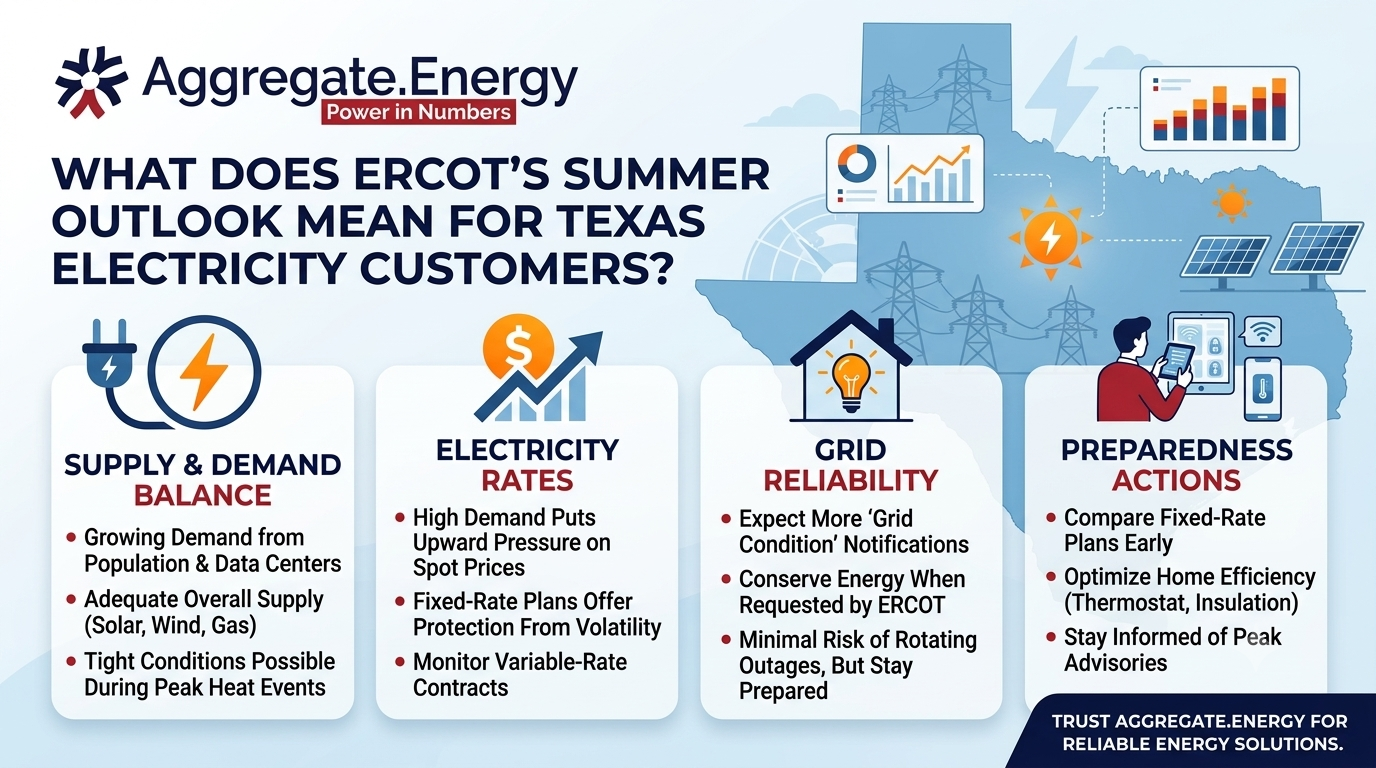
What Does ERCOT's Summer Outlook Mean for Texas Electricity Customers?
Texas summers bring more than heat. They bring higher electricity demand, rising usage, and questions about your monthly bill. If you've heard about ERCOT's Summer Outlook, you may wonder what it means for your home.Many Texas homeowners worry about higher bills in the hottest months. Others aren't sure whether to review their plan before demand climbs. Both concerns are fair, especially when extreme heat strains the state grid.Good news: understanding the outlook isn't complicated. Knowing how the grid works, and why demand shifts, helps you decide before peak summer arrives.What Is ERCOT?The Electric Reliability Council of Texas (ERCOT) manages electricity flow for most of the state. It balances supply and demand every hour to keep the grid reliable.ERCOT doesn't sell electricity to homeowners. It coordinates generation and delivery while monitoring grid conditions statewide.During summer, ERCOT watches:Electricity demandAvailable power generationWeather conditionsGrid reliabilityReserve capacityWhy Does ERCOT Release a Summer Outlook?Each year, ERCOT publishes a summer outlook so customers, businesses, and providers know what to expect in the hottest months.It weighs expected temperatures, forecasted demand, available generation, weather patterns, and grid reliability. It doesn't mean problems are guaranteed. It's an early look at conditions that could shape demand and market activity.For homeowners, it's a reminder: review usage, understand your plan, prepare before demand peaks.The 2026 Outlook: Demand Headed for a RecordThis year's numbers stand out. Grid demand is measured in megawatts (MW). The higher the summer peak, the harder the grid works, and the more prices tend to move.Here's how Texas summer peaks have climbed, with the 2026 forecast:The 2026 forecast of 92,211 MW would be the highest peak Texas has ever recorded, roughly 10% above last summer. A developing El Nino is pushing a hotter pattern, and the state keeps adding homes and businesses. More Texans, more AC, hotter days.2026 Summer Temperature Outlook. North and Panhandle lean near-to-above normal.The Drought FactorDrought feeds into how extreme the heat gets. In spring, large parts of Texas sat in severe to extreme drought. By early June, conditions improved. That eases some pressure, but doesn't cancel the demand story. A dry, hot run could push demand toward the record forecast.U.S. Drought Monitor, Texas, March 31, 2026. Widespread severe to extreme drought.U.S. Drought Monitor, Texas, June 4, 2026. Notable improvement statewide.Why Is Summer So Important for Texas Electricity?Texas sees some of the highest summer temperatures in the country. As heat rises, millions of homes lean on air conditioning.Higher Air Conditioning UseCooling often becomes the largest source of home electricity use in summer. Even with no routine change, your AC runs longer, so usage climbs.More Demand Across the GridWhen millions of homes and businesses draw power at once, statewide demand spikes. This is common during prolonged heatwaves.Increased Pressure in the Evening (9 to 11 pm)Many assume demand drops after sunset. It doesn't. Homes keep cooling while solar generation fades, and the tightest window is 9 to 11 pm. That's why ERCOT watches evening grid conditions so closely.What Does the Outlook Mean for Homeowners?For most homeowners, it's not a reason to panic. It's a reminder to prepare.Your Electricity Bill May IncreaseEven if your rate stays the same, your bill can rise because your home uses more electricity for cooling.Electricity Markets Can Become More ActiveHigh-demand periods can bring more price volatility. It doesn't hit every customer the same way, but understanding your plan before summer helps you avoid surprises.Reviewing Your Plan Becomes More ImportantIf your contract ends soon, or you're unsure which plan you have, summer is the time to review. Not sure whether you're on fixed or variable? Here's the simple way to tell.Can ERCOT's Outlook Affect Electricity Prices?How ERCOT grid conditions link to electricity prices.Indirectly. ERCOT doesn't set the rate you pay. But the conditions it describes, higher demand, hotter weather, tighter grid, can move the wholesale market. Depending on your plan, that may affect what you pay over time.That's why many homeowners review plans before peak demand. Why locking in early beats waiting walks through the timing.Common Summer Challenges Texas Homeowners FaceHigher Monthly BillsAC works harder in extended heat. Even with steady habits, longer cooling means a higher bill.Uncertainty About PlansMany homeowners don't know if they're on fixed or variable, or that their contract is near expiry, until a high bill lands.Confusing BillsBills carry several charges, making it hard to see what you're paying for and where to cut.Waiting Too Long to CompareSome wait through several expensive bills before reviewing. By then, earlier options are gone.What Can You Do Before Peak Summer Demand?Review Your Current PlanCheck your contract end date, whether the plan is fixed or variable, your average monthly usage, and any pricing change after the contract ends.Setting up service or switching? Find your ESID number first to confirm the correct service location.Improve Home Energy EfficiencyReplace dirty HVAC filters, seal leaks around doors and windows, use ceiling fans, close blinds midday, set an efficient thermostat.Monitor Your UsageMany providers offer online tools showing daily or monthly usage. Regular checks show when your home draws the most power and whether habit changes help.Compare Options Before Your Contract EndsDon't wait until the last minute. Comparing before peak demand gives more time to choose well. See how group electricity buying works before your next decision.Common Mistakes to Avoid During SummerIgnoring Your Renewal DateIf a contract expires without review, you miss the chance to evaluate options.Choosing on Price AloneThe lowest advertised rate isn't always best. Contract terms, pricing structure, and fit to your usage matter.Waiting Until Bills Get ExpensiveReviewing after several high bills limits your ability to prepare for peak demand.Forgetting HVAC MaintenanceA poorly maintained AC uses more electricity than needed. Regular maintenance improves efficiency.Why Planning Ahead Makes a DifferenceNo one controls the weather. You control how prepared you are. The outlook explains why demand rises; your choices shape what you pay. Review your plan, improve efficiency, monitor usage.ConclusionTexas summers bring higher temperatures, greater demand, and closer attention to grid conditions. ERCOT's outlook exists to help customers understand these seasonal challenges, not to cause alarm.The key takeaway: prepare early. Reviewing your plan, understanding usage, and making small efficiency improvements help you manage costs through peak summer.Preparing for a Texas summer starts with understanding your options. Aggregate Energy helps homeowners compare plans, understand contracts, and explore group electricity buying before peak demand. Enter your ZIP code to start.Frequently Asked QuestionsWhat is ERCOT's Summer Outlook?A seasonal forecast evaluating expected demand, available generation, and grid conditions during Texas summer.Does ERCOT decide my electricity rate?No. ERCOT manages the grid but doesn't set residential prices or sell electricity to customers.Why are Texas electricity bills usually higher in summer?Higher temperatures increase AC use, raising consumption and, for many homes, monthly bills.Can hot weather affect electricity prices?Extreme heat raises demand, which can shift market conditions depending on your plan.Should I review my plan before summer?Yes. Reviewing before peak demand helps you understand your contract, pricing, and options.What should I do during high-demand periods?Use electricity efficiently, maintain your HVAC, monitor usage, understand your plan.Can I switch providers during summer?If eligible, you can compare and switch per your contract terms and local regulations.How can Aggregate Energy help?Aggregate Energy helps Texas homeowners compare options, understand plans, and explore group electricity buying to make informed decisions.
By Aggregate Energy Team
Jul 21, 2026
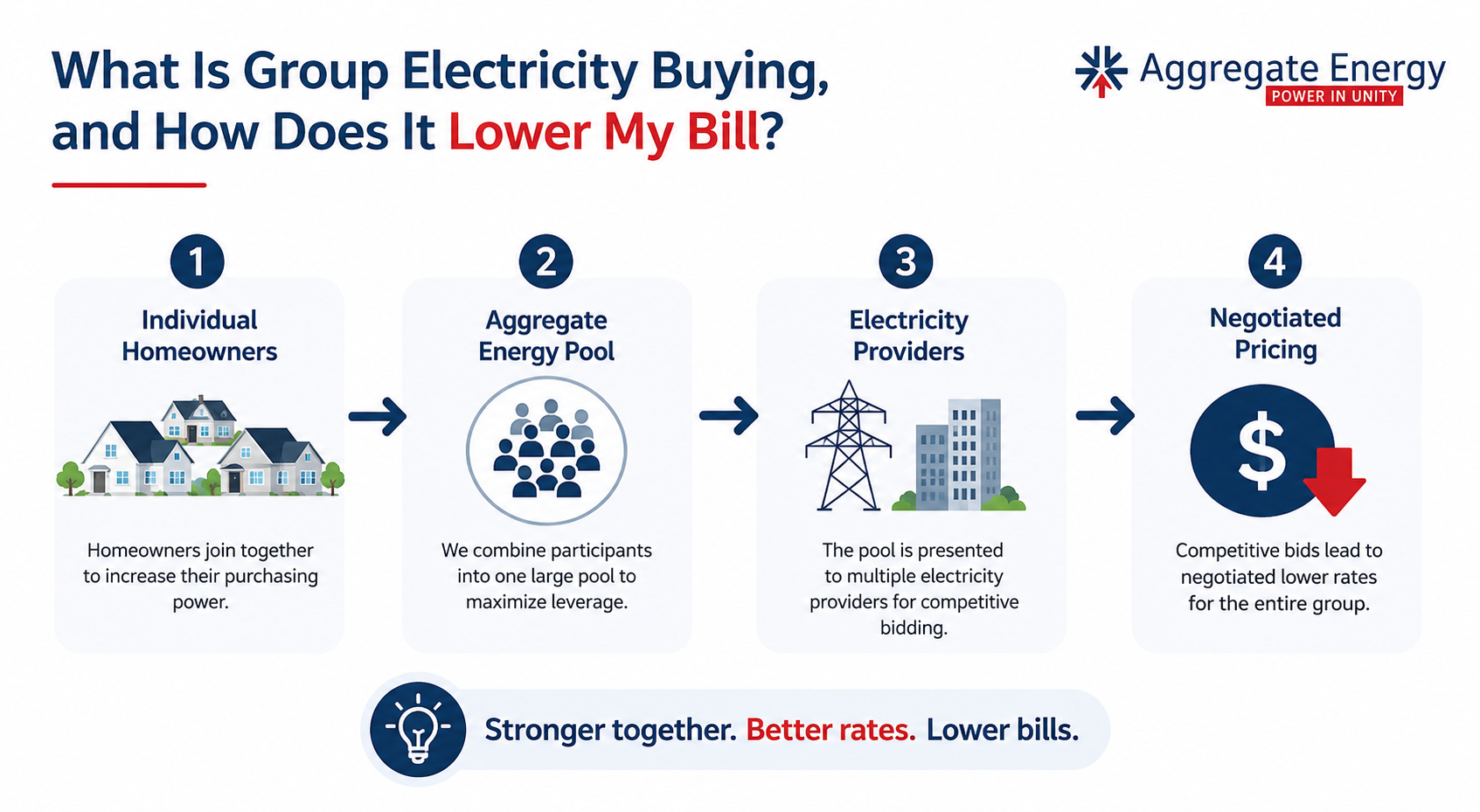
What Is Group Electricity Buying, and How Does It Lower My Bill?
Simple flow of how group electricity buying works Individual Homeowners → Aggregate Energy Pool → Electricity Providers → Negotiated PricingElectricity shopping in Texas is not as simple as it looks. On paper, it seems like you just compare plans and pick the cheapest one. But in reality, two similar homes in the same neighborhood can end up with completely different electricity bills.One household might lock in a decent rate, while another may end up paying more simply because of timing, plan structure, or how providers price individual customers.That’s not a mistake by the homeowner. It’s how a deregulated electricity market naturally works, pricing is built around individuals shopping alone.Now imagine something different.Instead of each home trying to figure it out alone, a group of households comes together and approaches electricity providers as one large, organized buying group.That simple shift changes everything.This is the foundation of group electricity buying in Texas, and it is the same model used by Aggregate Energy to help communities access more structured electricity opportunities.Aggregate Energy operates on a demand aggregation model that connects households into structured electricity buying groups to improve pricing access.Quick check: Check your ZIP code in seconds to see how Aggregate Energy group buying works in your area.What Group Electricity Buying Actually Means in TexasLet’s make this very real and simple.Think about how most people shop for electricity. One household goes online, compares a few providers, checks rates, maybe looks at confusing charts, and eventually picks a plan that feels “safe enough.”Now multiply that by 100 households doing the same thing separately.Each one is treated as a small, individual customer in a massive competitive market.Now flip the scenario.Instead of 100 separate buyers, those 100 households are grouped together and presented as a single, coordinated demand block.Now the electricity provider is no longer looking at small individual accounts. They are looking at a large, stable, and predictable customer base.That is where group electricity buying becomes powerful.It is not about changing electricity itself. It is about changing how buying power is structured.One Homeowner vs 100 Homeowners: What Actually ChangesImagine a homeowner in Texas sitting at their kitchen table late at night, scrolling through electricity plans. They’re comparing rates, reading fine print, trying to figure out what’s “good” and what’s not. In the end, they pick a plan that feels okay but there’s always a bit of uncertainty.Now shift the scene.Instead of one person, imagine 100 homeowners from the same area doing this together. Suddenly, the situation changes completely. The electricity provider is no longer dealing with one small account they’re looking at a large group of customers ready to join at once.That shift alone changes the conversation. It’s no longer about convincing individuals one by one. It’s about offering a better structure for a large group that already exists. That’s where the real difference happens between shopping alone and group electricity buying, Texas style purchasing.See what your neighborhood could save through group electricity buying in Texas programs. One Homeowner Shopping AloneA single homeowner in Houston or Dallas enters the market alone.They see:multiple electricity plansdifferent pricing structuresusage-based conditionshidden fees or creditsThey try to choose the “best” option, but they are still just one customer in a large system. Providers do not adjust pricing significantly for a single household because the business impact is limited.So the result is usually standard retail pricing.100 Homeowners Shopping TogetherNow imagine 100 homeowners from the same region doing this together through a structured group.From the provider’s perspective, this is a completely different opportunity.Instead of:acquiring 100 separate customersspending marketing budget 100 timesonboarding each account individuallyThey can acquire all 100 in one organized deal.That reduces their cost per customer significantly and increases certainty of volume.And when providers gain efficiency, they often have more flexibility in pricing structure.This is the key mechanism behind group electricity buying in Texas programs and the model used by Aggregate Energy.Why Electricity Providers Respond Differently to GroupsElectricity companies usually spend a significant amount of money acquiring customers. Between advertising, comparison platforms, promotions, and onboarding processes, each household typically requires separate effort and cost.Now imagine removing that entire process.Instead of attracting customers one by one, a provider is presented with a ready-made group of households all at once. No scattered outreach, no repeated marketing spend, and no individual onboarding efforts for every single account.From their perspective, this is a very different opportunity.It means they are no longer dealing with isolated customers but with a structured, predictable group of demand. That shift changes how they evaluate pricing and partnerships.This is the kind of system Aggregate Energy is built around organizing household demand so providers can engage more efficiently at scale.At a basic level, acquiring individual customers involves:advertising and marketing costscomparison platform feespromotional incentivesadministrative onboarding effortWhen this process is repeated hundreds of times, it becomes expensive and inefficient.But when households are grouped together, those efforts are consolidated into a single acquisition flow.From a provider’s point of view, group-based demand offers three key advantages:lower cost to acquire each customerhigher guaranteed volume in one dealreduced uncertainty in future demandBecause of this improved efficiency, providers are often able to structure more competitive and organized pricing options compared to traditional individual retail shopping.Why This Idea Already Exists in Everyday LifeGroup buying is already common in daily life. Wholesale clubs sell products cheaper in bulk because people buy together. Insurance works through shared risk pools. Employers negotiate health plans for entire teams instead of individuals. Even farmer cooperatives buy supplies in groups to reduce cost. Electricity follows the same logic when demand is combined, efficiency improves.Wholesale ClubsPeople pay lower prices because they buy in bulk as a group rather than individually. The store benefits from guaranteed volume, and customers benefit from lower per-unit cost.Insurance Risk PoolsInsurance works because risk is shared across many people. Instead of pricing based on one person, it is spread across a group to stabilize cost.Employer Health PlansCompanies negotiate healthcare coverage for employees as a group. This allows better pricing than an individual could access alone.Buying CooperativesFarmers and small businesses often pool resources to purchase supplies in bulk, reducing overall cost.Electricity works on the same principle. When demand is grouped, pricing efficiency improves.How Group Electricity Buying Actually Impacts Your BillHere’s a simple way to picture it.You’re still running the same AC, using the same fridge, and consuming the same amount of electricity. That part doesn’t change.What changes is what happens before the bill is even created.When households are grouped together, electricity providers look at a larger, more predictable block of demand. That reduces their cost of acquiring customers and managing individual accounts.Instead of pricing each home separately in a highly competitive retail environment, they can structure pricing around a larger group agreement.For a homeowner, this doesn’t mean guaranteed savings every time but it often means access to more structured pricing options that are not available when shopping alone.When households are grouped together:providers reduce customer acquisition costspricing becomes more competitive at scaleretail markups can be reduced or restructuredgroup-specific plans may become availableSo the impact is not on usage, but on pricing structure.That is why group models can sometimes result in more favorable billing outcomes compared to individual retail shopping.A Realistic Look at Savings in TexasIt’s important to stay practical here.Savings from group electricity buying are not fixed or guaranteed because electricity pricing depends on multiple factors.For example:A small apartment with low usage may see modest differences depending on the plan structure.A large home with higher consumption may experience more noticeable changes.Market timing and seasonal demand also play a role.So instead of thinking of it as a fixed discount, it is more accurate to see it as access to better-negotiated pricing opportunities that are not typically available when shopping alone.How This Works in Practice Through Aggregate EnergyHere is what actually happens in a real-world flow.Households join a community electricity buying group through Aggregate Energy.Their demand is combined into a structured pool representing collective consumption.Electricity providers then evaluate this group as a single large opportunity rather than multiple small accounts.Based on that, they present pricing options designed for that volume.Households then choose from structured plans that reflect collective buying power rather than individual negotiation.Common Concerns People Usually HaveWhen people first hear about group electricity buying, they usually pause and ask the same thing: “Is this actually safe or just another complicated plan?”That reaction is completely normal.The reality is much simpler than it sounds. Your electricity doesn’t change at all. The power still comes through the same local utility lines, the same infrastructure, and the same physical delivery system.Another common concern is whether someone gets locked into a group permanently. In most cases, participation is structured with flexibility, not restriction.And then there’s the question of fees. People assume there must be hidden costs somewhere but that depends entirely on how the program is designed. The important part is transparency, which is clearly defined before joining.So instead of changing how electricity works, group buying simply changes how people access pricing in the first place.Is this legitimate?Yes. Group buying is a well-established model used across multiple industries, adapted for electricity markets.Will I be locked into a group forever?No. Participation is generally designed with flexibility depending on the program structure.Does my electricity service change?No. Electricity delivery remains exactly the same through your local utility infrastructure.Does my utility company change?No. Your utility still handles physical delivery and maintenance.Are there participation fees?This depends on the program, but many models are designed to keep participation simple and transparent.Why More Texans Are Paying Attention to This ModelElectricity in Texas has become more complex over time, especially with multiple providers, fluctuating rates, and usage-based pricing structures.Many households feel overwhelmed when comparing plans because small differences in terms can lead to large differences in monthly bills.Group electricity buying is gaining attention because it simplifies this process.Instead of dozens of separate decisions, households participate in a coordinated structure that focuses on collective negotiation rather than individual guesswork.Final ThoughtsAt its core, group electricity buying is not about changing how electricity is delivered.It is about changing how electricity is purchased.When households stop negotiating alone and start negotiating together, the entire pricing dynamic shifts.That is the foundation behind Aggregate Energy helping communities unlock the power of collective electricity purchasing to create more structured and efficient outcomes.Check your ZIP code today and see how joining a community electricity buying group through Aggregate Energy can help you access more structured and competitive electricity options in your area. FAQsWhat is group electricity buying in Texas?It is a system where multiple households combine their electricity demand to access more structured and competitive pricing options.How does group electricity buying lower my bill?It improves provider efficiency and reduces acquisition costs, which can lead to more competitive pricing structures.Is it available in my area?It depends on whether your location is part of a deregulated electricity market in Texas.Can I leave a group buying program?Most programs are designed with flexibility depending on structure and terms.Is it better than comparing plans alone?It depends on whether you prefer simplicity or detailed individual comparison and control.Why do providers support group buying?Because it reduces customer acquisition costs and improves enrollment efficiency.
By Aggregate Energy Team
Jun 25, 2026

What's an ESID Number, and How Do I Find Mine in Texas?
If you're setting up electricity service in Texas, switching providers, or moving to a new address, you may be asked for your ESID number. Many residents encounter this term for the first time during enrollment and aren't sure what it means or where to find it.An ESID (Electric Service Identifier) is a unique number assigned to every electricity service location in deregulated areas of Texas. It helps identify the exact property receiving electricity and ensures service is connected to the correct address.The good news is that finding your ESID is usually simple. You can locate it on your electricity bill, through an ESID lookup tool, or by contacting your electricity provider or utility company.For Texas residents looking to start service or compare electricity plans, Aggregate Energy provides resources that help identify service information, explore available electricity options, and simplify the enrollment process.This guide explains everything you need to know about ESID numbers, why they matter, and how to find yours quickly.Quick Answer: How to Find Your ESID Number in TexasAn ESID (Electric Service Identifier) is a unique identifier assigned to every electricity service address in Texas.You can typically find your ESID by:Checking a recent electricity billUsing an ESID lookup toolContacting your electricity providerContacting your utility companySearching by service address when availableYour ESID remains connected to the property even if you switch electricity providers.Need Electricity Service at a New Address?Before starting electricity service, you'll need to identify your service location and choose an electricity plan.Aggregate Energy helps Texas residents:Compare electricity plans from multiple providersCheck available options by ZIP codeReview rates and plan featuresStart enrollment for a new addressFind electricity plans that fit their needs Whether you're moving or switching providers, Aggregate Energy simplifies the process of finding and enrolling in electricity service.What Is an ESID Number?ESID stands for Electric Service Identifier. It is a unique identification number assigned to each electricity service location in deregulated areas of Texas.Think of it as a permanent identifier for a property's electric connection. Every home, apartment, condominium, and business with electricity service receives its own ESID.Utility companies use ESIDs to identify specific service locations and ensure electricity is delivered to the correct property. Because the ESID is associated with the location rather than the customer, it generally remains the same even when occupants move or change providers.Many people confuse an ESID with other electricity-related numbers, but each serves a different purpose.ESID vs Account Number vs Meter NumberESID NumberIdentifies the electricity service location and stays tied to the property.Account NumberAssigned by your electricity provider and may change if you switch providers.Meter NumberIdentifies the physical electricity meter installed at the property.Understanding these differences helps avoid confusion when starting service, switching providers, or reviewing your electricity bill.Why Is an ESID Number Important?The ESID is important because it ensures electricity is connected to the correct property and helps avoid errors during service setup or changes. Whether you're starting service, switching providers, or moving, this number helps utility companies and electricity providers accurately identify your service location before completing the enrollment process on the Enrollment page. Starting Electricity ServiceWhen enrolling in a new electricity plan, providers use the ESID to verify the exact service location where power should be activated.Switching Electricity ProvidersTexas residents can choose from multiple electricity providers. During a switch, the ESID helps ensure the new provider enrolls the correct property.Moving to a New HomeHaving the correct ESID can make the move-in process smoother and help avoid delays in electricity activation.Verifying Service LocationsApartment complexes, townhomes, duplexes, and commercial properties often have multiple service locations. ESIDs help distinguish one unit from another.How Does an ESID Connect Your Electricity Service?When you start electricity service or switch providers, the ESID helps identify the exact property that should receive electricity. It allows the utility company and electricity provider to verify the correct service location, helping prevent enrollment mistakes and service delays.Property Address↓ESID Number↓Local Utility Company↓Electricity Provider↓Active Electricity ServiceThis process helps ensure electricity service is established at the correct address and managed accurately throughout the enrollment process.How to Find Your ESID Number in TexasThere are several ways to find your ESID number in Texas, depending on the information you have available. Most residents can locate it on their electricity bill, while others may need to use an ESID lookup tool or contact their electricity provider. The methods below can help you identify the correct service location and avoid delays when starting or switching electricity service. Check Your Electricity BillFor most customers, the easiest way to find an ESID is by reviewing a recent electricity bill.Look for labels such as:ESIDElectric Service IdentifierService IDService Location Identifier The exact placement varies by provider but is often located near your account details or service address.Use an ESID Lookup ToolIf you don't have access to a recent bill, an ESID lookup tool can help identify your service location.Aggregate Energy's ESID Lookup tool can help Texas residents find service information before comparing plans or beginning enrollment. By identifying the correct service location, Aggregate Energy helps reduce enrollment errors and simplifies the electricity setup process. Address-based searches can simplify the process and help reduce enrollment mistakes.Contact Your Electricity ProviderYour current electricity provider can usually provide your ESID after verifying account information.Before contacting customer support, have the following information available:Service addressAccount numberName on the accountContact information This can help speed up the verification process.Contact Your Utility CompanyLocal utility companies maintain records for electricity service locations and may be able to verify the ESID associated with a property.This can be particularly useful if you're moving into a home and do not yet have an active electricity account.Can You Find an ESID Number With Only an Address?Yes. In many situations, an ESID can be located using only the service address.Address-based searches are commonly used by electricity providers and ESID lookup tools throughout Texas.When searching by address:Enter the complete address accuratelyInclude apartment or unit numbers when applicableVerify street abbreviations and spelling Small errors can affect search results, especially in apartment communities and multi-unit properties.If the address does not return results, contacting the provider or utility company is often the best next step.Which Texas Utility Companies Use ESID Numbers?ESID numbers are commonly used throughout deregulated areas of Texas and are associated with service locations maintained by major utility companies.Some of the largest utility companies include:OncorCenterPoint EnergyAEP Texas NorthAEP Texas CentralTexas New Mexico Power (TNMP) Although customers choose their electricity provider, the local utility company remains responsible for maintaining power lines and delivering electricity.Once your service location is identified, Aggregate Energy can help you compare electricity plans available in your area and explore provider options that match your needs.Common Problems When Looking Up an ESIDFinding an ESID is usually straightforward, but some situations can create challenges.Apartments and Multi Unit BuildingsApartment complexes often contain multiple ESIDs at the same street address. Entering the correct unit number is essential.New Construction HomesRecently built homes may not immediately appear in every lookup database. Utility records can take time to update.Multiple Meters at One PropertySome properties contain multiple electric meters for detached structures, rental units, or commercial spaces. Each service point may have a different ESID.Recently Moved CustomersUsing an old address is a common mistake. Always verify that the service address matches the location where electricity is needed.What Information Do You Need to Start Electricity Service?Whether you're moving into a new home or switching providers, having the right information available can help simplify enrollment.Most providers may request:ESID numberService addressMove-in dateContact informationIdentification details when required Providing accurate information helps reduce delays and ensures service is activated at the correct property.How Aggregate Energy Helps Texas Residents Compare Electricity PlansFinding your ESID is often only the first step. Once you've identified your service location, you'll need to choose an electricity plan.Aggregate Energy helps Texans:Compare electricity plans from multiple providersSearch available options by ZIP codeReview rates and plan featuresExplore fixed-rate and variable-rate plansStart electricity service at a new addressSwitch providers when better options become available Instead of visiting multiple provider websites individually, Texas residents can use Aggregate Energy to simplify the comparison process and make more informed electricity decisions.If you're researching your electricity options, you can also compare Aggregate Energy and Power to Choose to understand the differences between these electricity shopping platforms and determine which option best fits your needs. Frequently Asked Questions About ESID Numbers in TexasCan I Find My ESID Without a Bill?Yes. Many Texas residents can locate their ESID using an address-based lookup tool, by contacting their electricity provider, or by reaching out to their utility company.Is an ESID Number the Same as a Meter Number?No. An ESID identifies the electricity service location, while a meter number identifies the physical electric meter installed at that property.Does My ESID Change If I Switch Providers?No. In most cases, the ESID remains associated with the property even when customers switch electricity providers.Can I Switch Providers Without My ESID?Some providers can locate your ESID using your service address. However, having the ESID available can help speed up enrollment and reduce errors.Can Multiple Apartments Have Different ESIDs?Yes. Individual apartment units generally have separate ESIDs because each unit receives its own electricity service connection.How Many Digits Is an ESID Number?ESID numbers are typically long numeric identifiers used by Texas electricity systems to identify service locations. The exact format may vary depending on utility records.Final ThoughtsAn ESID number is a unique identifier assigned to every electricity service location in deregulated areas of Texas. Whether you're starting service, moving to a new home, verifying an address, or switching providers, having the correct ESID helps ensure electricity is connected to the right property.Fortunately, finding your ESID is usually simple. You can check your electricity bill, use an ESID lookup tool, contact your provider, or reach out to your utility company.Whether you're moving, starting service at a new address, or switching providers, Aggregate Energy simplifies the process of finding and enrolling in electricity service. Compare available electricity plans, explore options by ZIP code, and use the ESID Lookup tool to verify your service location before enrollment.
By Aggregate Energy Team
Jun 25, 2026