
Quick answer
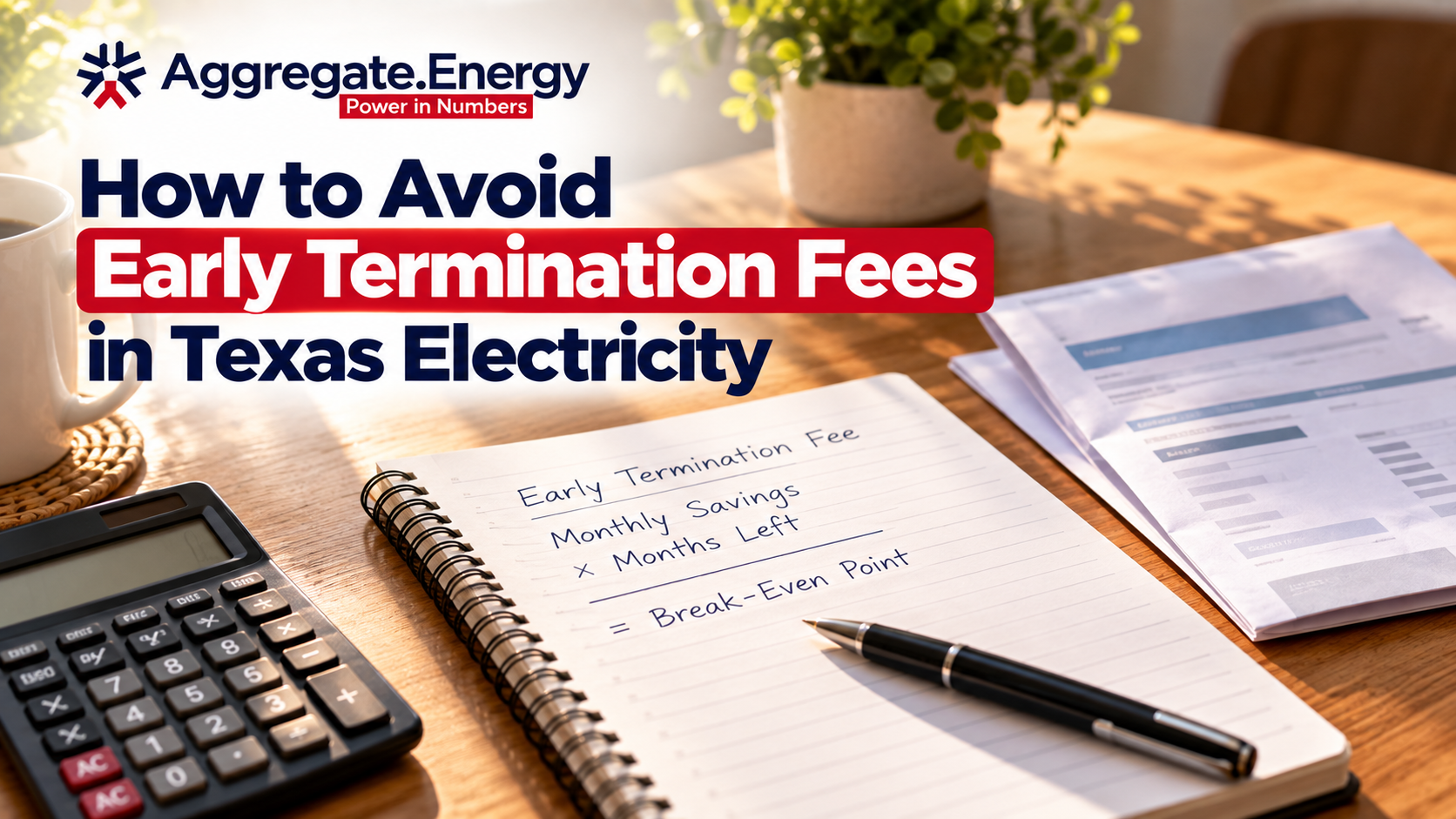
Leaving early is worth it when the fee costs less than what you lose by staying. Take the gap between your price and the new one, multiply it by your monthly usage, then divide the fee by that number. If the answer is fewer months than you have left, switching wins.
One calculation settles this
Most articles argue about whether these fees are fair. That is not your problem. Your problem is arithmetic.
You need four numbers. You already have all of them.
| Number | Where to find it |
|---|---|
| Your price per kWh now | The average price line on your latest bill |
| The new plan’s price at your usage | Its label, at 500, 1,000 or 2,000 kWh |
| Your usage per month | 12 months of history in your online account |
| Your exit fee | The early cancellation part of your current label |
Then:
Monthly saving = (your price - new price) x your monthly kWh
Months to break even = fee / monthly saving
If that number is smaller than the months left on your contract, switch. If it is bigger, stay and shop properly before your end date.
A worked example
A home uses 1,200 kWh a month. It pays 17 cents all in. It can sign at 14 cents. The fee is $150 and eight months are left.
| Step | Number |
|---|---|
| Price gap | 3 cents per kWh |
| Monthly saving | 1,200 x 3 cents = $36 |
| Break even | $150 / $36 = 4.2 months |
| Months left | 8 |
| Answer | Switch. It pays for itself with four months to spare. |
Change one number and the answer flips. Same fee, same usage, but a 1 cent gap saves only $12 a month. That takes 12.5 months to break even. With eight months left, staying wins.
Those are example numbers. Run it on your own bill.
Two kinds of fee
| Type | How it works | When it hurts |
|---|---|---|
| Flat fee | One set amount, whatever the time left | Late in the contract, with few months to recover it |
| Per month remaining | An amount times the months left | Early in the contract, with many months left |
A per-month fee shrinks as your end date gets closer, so a late switch is often cheap. A flat fee never shrinks. That is exactly why the last 14 days matter.
Four times you pay no fee at all
- The last 14 days before your contract ends. Under PUCT Rule 25.475, no exit penalty applies to a home switching no earlier than 14 days before the end date in your notice.
- After the contract has ended. The month-to-month default plan has no exit fee. Leave any time.
- When you move. Your contract belongs to your service address. Tell your provider before you move and ask what proof they need.
- Within three business days of signing up. You can cancel a new enrolment in that window.
The first one gets missed most. Your expiry letter has to show the end date in bold and underlined, with a line about the fee-free window. Find that letter before you hand anyone $150.
What to check on the label first
- The fee and its type. Flat, or per month remaining, and the exact amount.
- Your end date. Inside 14 days? Stop calculating and switch.
- The new plan’s three prices, so you are not comparing an ad to a real bill.
- Bill credits and minimum usage fees on the new plan, which can wipe out the gap you just calculated.
- The new contract’s own exit fee. You are signing one too.
Timing beats fee maths
The homes that never face this are the ones that write down the end date the day they sign.
Start comparing 45 to 60 days out. Line the new plan up to start the day after the old one ends. Then the fee never comes up.
That is also the part a buying pool takes off your plate. Aggregate Energy shops and renews homes as a group, so the date is not sitting on one person’s calendar. Check your ZIP code to see how it works.
Frequently asked questions
How much is an exit fee in Texas?
It varies by plan and is printed on the label, either as one flat amount or an amount per month remaining. Check your own label.
Can the fee be waived?
It does not apply in the last 14 days before your end date, after the contract ends, or within three business days of signing up.
What if I am moving?
Your contract is tied to your address. Tell your provider before the move and ask what they need from you.
Does the fee get smaller over time?
Only the per-month type. A flat fee stays the same until the fee-free window opens.
Is it ever worth paying?
Yes, when the break-even number comes in under the months you have left. Run it on your own bill first.